What makes a top commercial real estate CRM
Commercial real estate is different from residential. Deals are bigger, take longer and involve more people. A commercial real estate CRM must track properties, companies and deals, not just people. It needs to handle the complexity of CRE without forcing you into a residential workflow.
A top commercial real estate CRM should handle properties with size, type, owner, tenants and lease end dates. It should track companies and contacts like owners, tenants, lenders and attorneys. It should manage deals with many stages for sales, leases and investments. And it should handle comps, lease expiration tracking, document storage and maps.
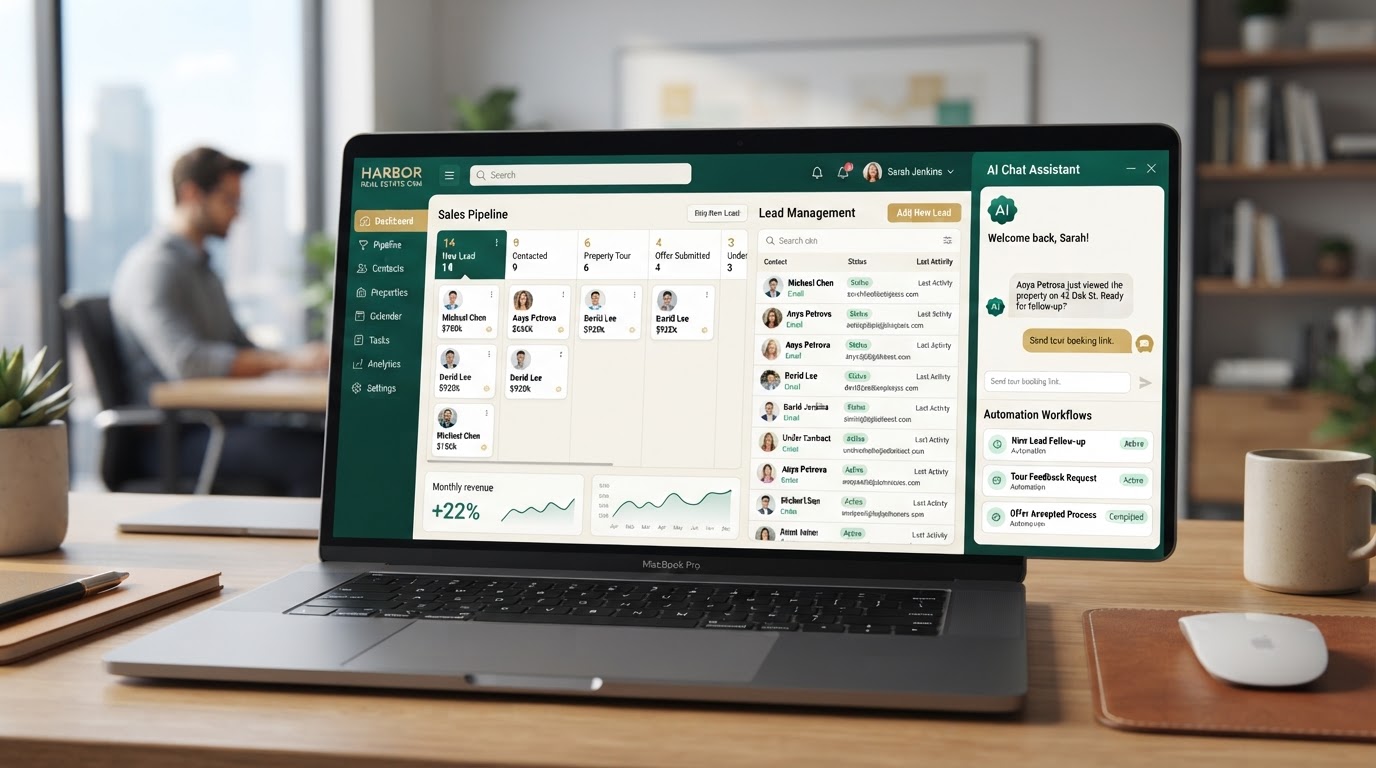
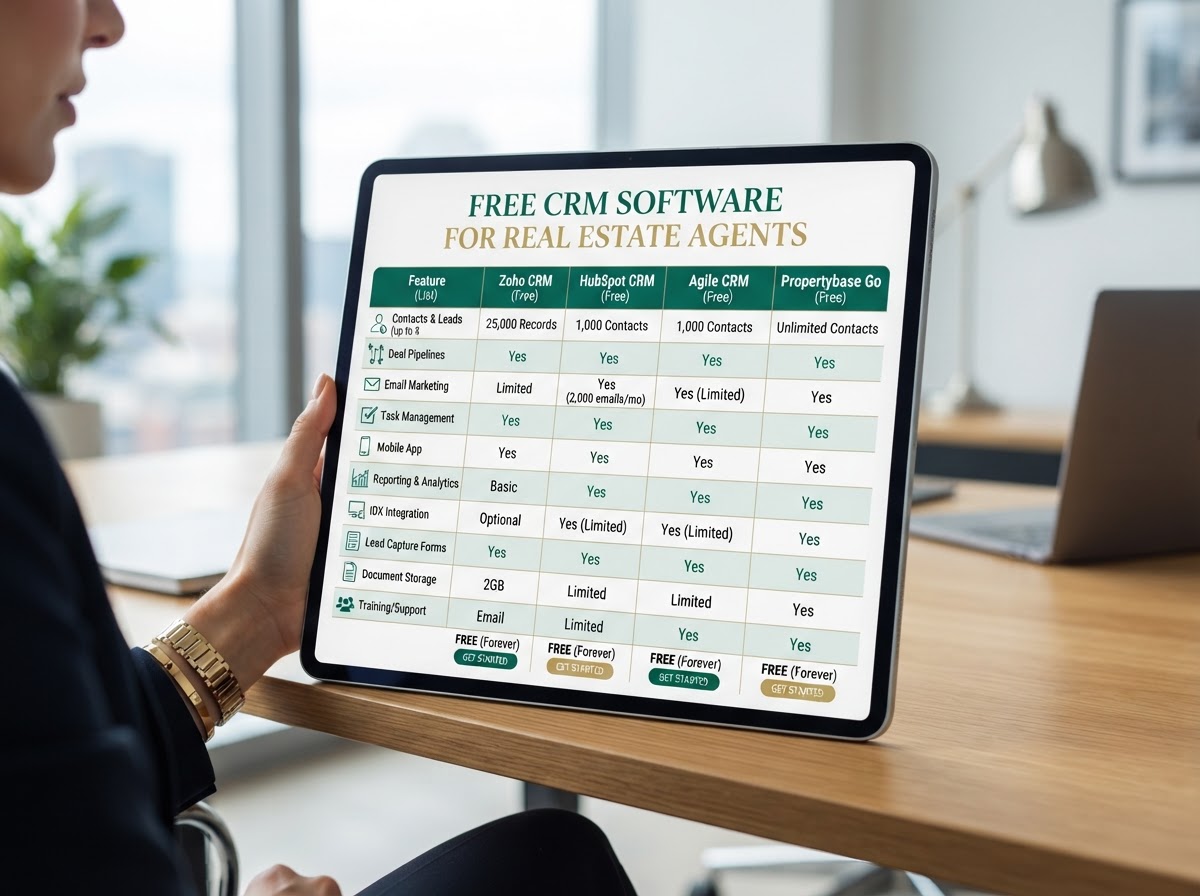
The best CRM software for commercial real estate bends to your process. You should be able to build custom fields for property details, separate pipelines for sales and leases, and long-term outreach plans to owners and tenants. If the tool forces you to work like a residential agent, it is not a CRE CRM. See how it fits the wider best CRM for real estate picture.
The checklist
Here is the exact checklist we use when setting up a commercial real estate broker CRM. Use this when you compare tools or set up your own.
Custom property fields: size, type, lease end date, owner, tenants, sale or lease status. You need to see the full picture of each property in one view.
Separate pipelines for sales and leases. A sale and a lease have different stages. Do not mix them in one pipeline.
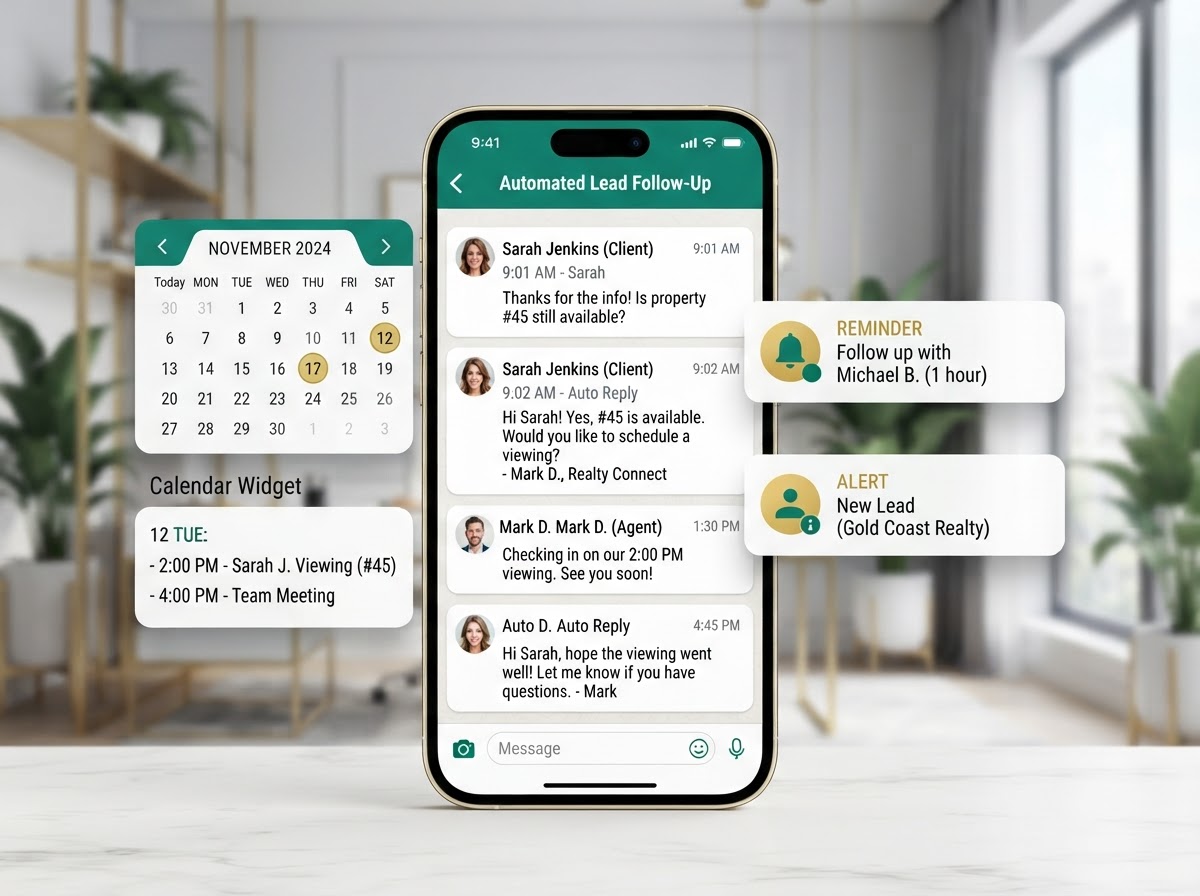
Long-term outreach plans to owners and tenants. In CRE, you often call owners for months or years before a deal. Your CRM should remind you to call and log every talk.
Deal comps and relationship tracking. You need to know what similar properties sold or leased for, and who you have relationships with at each company.
Owner prospecting reminders. The money in CRE is in finding owners who are likely to sell or lease before they list. Your CRM should help you track and nurture those relationships.
Property and deal tracking
In CRE, a property is not just an address. It has a type (office, retail, industrial, multifamily), a size, an owner, tenants, lease end dates and a value. Your CRM should store all of this in custom fields so you can search and filter by any of them.
Deals in CRE are complex. A sale might have stages like LOI, due diligence, contract, closing. A lease might have stages like tour, LOI, lease terms, signing. Build separate pipelines for each deal type so your team knows where every deal stands.
The best CRM for commercial real estate lets you see all your properties on a map, filter by type and size, and spot owners who own multiple properties. That is how you find your next deal before anyone else does.
Owner outreach
In CRE, you often call owners for months or years before a deal happens. Your commercial real estate broker CRM should remind you to call, log every conversation and show you which owners are likely to sell or lease soon.
Lease expiration tracking is key. If you know a tenant's lease ends in 18 months, you can start outreach now. If you know an owner has held a property for 20 years, they may be ready to sell. Your CRM should flag these opportunities automatically.
Good crm software commercial real estate firms use connects to commercial real estate lead generation software too. Owner data tools, email outreach, LinkedIn outreach and cold calling tools should all feed new contacts back into one CRM database, so your team does not lose track. NAR's commercial research is a solid source for market data to feed those campaigns.
Comps and market data
Comps are the backbone of CRE. You need to know what similar properties sold or leased for, when, and on what terms. Some CRE CRMs include a comps database. Others connect to a third-party comps tool.
If your CRM does not include comps, you can pair it with a comps tool. The key is that your CRM and your comps tool talk to each other, so you do not track deals in two places. When you pull a comp, it should flow into your deal record.
Market data also matters. Knowing vacancy rates, rent trends and cap rates for a submarket helps you advise clients and win listings. The best CRM for commercial real estate brokers connects to market data so you always have the numbers when you need them.
Team workflows
CRE teams are often small but specialized. A broker, an associate, maybe a research analyst. Your CRM should support roles and permissions so each person sees what they need without clutter.
Shared pipelines and reports let the team see every deal in one place. But each broker should also have their own view of their deals and their owner relationships. Good CRM software for commercial real estate handles both.
If you run multiple offices or brands, look for a CRM with sub-accounts. Each office gets its own space, but you can share templates and run reports across all of them from one login.
What to avoid
Avoid tools that force a residential workflow onto CRE. If the CRM treats every contact as a home buyer, it will not work for your deals. You need custom objects for properties and companies, not just contacts.
Avoid tools that do not support long-term follow-up. In CRE, deals take months or years. If your CRM cannot run a 12-month outreach plan, you will lose track of owners you should be calling.
And avoid tools that cost four times as much for the same features. The best CRM for commercial real estate does not need to be the most expensive. A well-set-up all-in-one platform can handle custom property pipelines, owner outreach and follow-up at a fraction of the cost of enterprise CRE tools. Want ours set up? Book a free call.
Frequently asked questions
What is the best CRM for commercial real estate?
An all-in-one platform with custom property and deal pipelines is our top pick for CRE. It handles owner outreach, follow-up and deal tracking at a fair cost. Apto, Buildout and RealNex are other choices.
Do commercial real estate CRMs need comps data?
Yes. Comps are the backbone of CRE. Some CRMs include a comps database. Others connect to a third-party comps tool. The key is that they talk to each other.
How long does CRE follow-up take?
Often months or years. In CRE, you call owners for a long time before a deal. Your CRM should run long-term outreach plans and remind you to call.
Can I use a residential CRM for commercial real estate?
You can, but it is not ideal. CRE needs custom objects for properties and companies, separate pipelines for sales and leases, and long-term owner outreach. A residential workflow will not fit.
Keywords covered
Ready to put this into practice?
Start a free trial of the platform we build on — then let us set it up for your team.